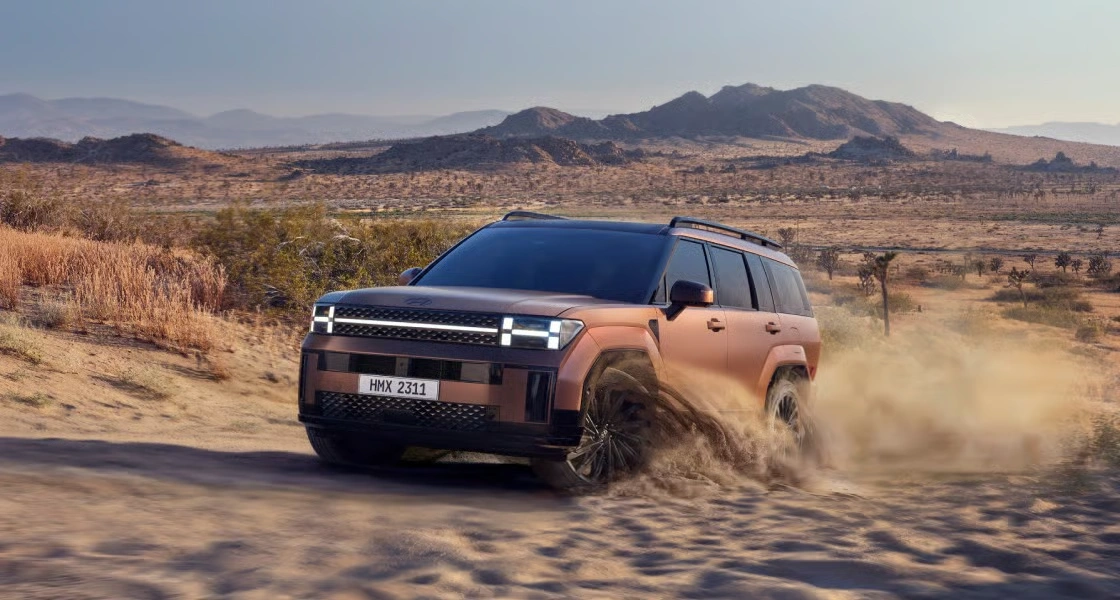
The fuel economy of our long-term Santa Fe Hybrid has been terrible. The government-mandated ratings printed on the window sticker create an unrealistic expectation in which this three-row SUV can manage 35 miles per gallon, and after 13,283 miles we’ve managed just 25.3 mpg in reality.
It didn’t really surprise me at all, either. Testing in the EPA laboratory isn’t as taxing as the real world for this small-displacement turbocharged engine that must pull its weight as the engine moves a big, slab-sided box around. You’ll certainly hear and feel it too in the Santa Fe as the I-4 engine often spins beyond 5,000 rpm during relaxed acceleration even with the assistance of the electric motor.
Also Read : 2026 Toyota Supra MkV Final Edition First Drive: The Farewell Model That Proves the Critics Wrong
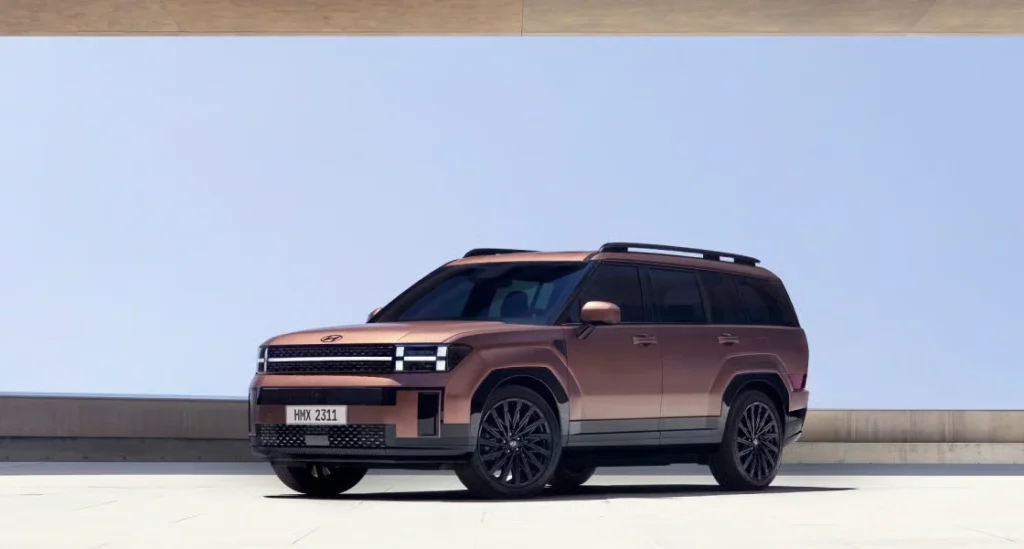
Recently I have been asking myself what it would take to replicate the fuel economy ratings of the Santa Fe in real-world driving. This was not something I could accomplish by doing what I typically do, but rather something else, which I could potentially do for some time period. To that end, I wore my lightest shoes and embarked on a highway and an urban drive to determine exactly how gently one needs to drive to reach the stated fuel economy numbers.
Head out to one of the major interstates crisscrossing Metro Detroit, and you’ll get the impression that speeding on the open road is Michigan’s official recreation. (That honor belongs to consumption of preserved meats.) Driving the posted speed on I-96? You may as well pedal the Schwinn bicycle to work. See the construction-zone sign? There goes the sign to put the gas pedal down: nowhere for the police to lay an ambush. Yes, this is an absurd and insulting statement to make, but then again, those are just the facts about this place.
Breaking Michigan’s unwritten laws of the road will be a prerequisite to meeting the EPA fuel-economy figure for the Santa Fe’s claimed highway fuel economy number. No, I’m not gunning it to 80 mph or even the advertised speed of 75 mph. Based on observations using the onboard trip computer over the past several months, the square-lined Santa Fe will force me to obey the speed limit on the open highway for the first time in years.
With a full tank of gas and a scientific dedication to taking it easy, I pull into I-94, the major east-west artery for truckers traveling through Michigan, and wind up driving alongside a semi truck transporting cargo that is at once explosive and electrifying enough to shock the pants off of me according to the caution stickers. Rather than hitting the gas and making a quick getaway like I usually would, I ease off the accelerator and drive directly behind the cargo of the semi truck.
Also Read : Ferrari HC25 One-Off Could Be the Last Non-Hybrid Mid-Engined V8 Ferrari Ever
The fuel economy gauge of the Santa Fe informs my speed. Since I know the readouts are a bit optimistic, I shoot for 36 mpgs. After bouncing around between 60 and 70 miles per hour, I settle in on a steady 65 miles per hour. The speed is surprisingly tolerable despite the knowledge that I am now traveling slower than any other non-commercial vehicle. Over the course of a 100 mile drive, I only manage to pass six cars total, including one box truck with “Maximum Speed 63” etched into the dirty roll-up door. The idea of passing an Amazon Prime semi-truck and a GMC Sierra towing a trailer is thrilling until I discover
I drive up to the gas station where the Santa Fe is showing 36.8 mpg. Checking my GPS data logger, I realize that I’ve averaged 64 mph, which is easily 10 mph less than I normally would average. I take out my calculator and try to figure out miles driven divided by gallons consumed to find that I was still not careful enough. I’ve managed to average only 33.0 mpg, 1 mpg shy of the EPA sticker. In order to get to 34 mpg, I had to go even slower. Exactly how much slower? Not sure.
Even though I missed my mark on the highway test, I have no doubt that I’ll pass the city test. The challenge will be finding another 2 mpg to match the 35-mpg city efficiency rating of the Santa Fe, but I’m sure it can be done. The Hyundai’s computer has shown readings in the high 30s on many occasions when running errands around town, and there’s no change to my driving style.
For the city test, I make a conscious effort to slow down and drive in a circular route around Ann Arbor, a university city with a population of 122,000 people. Rather than trying to navigate through traffic to gain an advantage, I simply follow the flow and even fall back sometimes. My maximum acceleration comes in at 0.23 g, a level of acceleration that is roughly similar to what a cyclist could achieve.
This approach isn’t without its faults. Not only is it very boring to spend hours in the car without reaching 25 mph or going even a mile before stopping at a red light, but it’s also very inefficient. My average efficiency reading is in the low 30s as shown by the car’s trip computer.
Without a predetermined location to reach, I set my course for the suburban roads of Ann Arbor, cruising along the two-lane roads at a steady speed of 45 mph for several miles uninterrupted. Such driving conditions are ideal for any gasoline-powered vehicle, but particularly so for the Santa Fe Hybrid since it is able to periodically turn off the engine when cruising at this slow pace. I am soon averaging over 40 mpg and then make my way back into town to lower my efficiency.
After growing tired of the boring city driving, I head back to the gas station at which I started. It tells me that the Hyundai achieved an average mpg of 38.2, but doing the calculations myself proves that I have actually done an average of 35.4 mpg. It is as close to perfection as I am going to get. While it does not sound so bad to travel a moving average of 23 mph within cities, when taking into account all the time I have been stationary, it drops to only 17 miles per hour.
| 2025 Hyundai Santa Fe Hybrid Limited AWD Specifications | |
| BASE PRICE | $47,995 |
| PRICE AS TESTED | $48,235 |
| OPTIONS | Carpeted floormats, $240; second-row bench seat, $0 |
| VEHICLE LAYOUT | Front-engine, front-motor, AWD, 7-pass, 4-door hybrid SUV |
| POWERTRAIN | 1.6L turbo direct-injected DOHC 16-valve I-4, 178 hp @ 5,500 rpm, 195 lb-ft @ 1,500 rpm Permanent-magnet motor, 59 hp, 195 lb-ft |
| TOTAL POWER | 231 hp |
| TOTAL TORQUE | 271 lb-ft |
| TRANSMISSION | 6-speed automatic |
| BATTERY | 1.5-kWh lithium-ion |
| CURB WEIGHT (F/R DIST) | 4,496 lb (54/46%) |
| WHEELBASE | 110.8 in |
| LENGTH x WIDTH x HEIGHT | 190.2 x 74.8 x 67.7 in |
| TIRES | Pirelli Scorpion MS 255/45R20 105V XL M+S |
| EPA FUEL ECONOMY, CITY/HWY/COMBINED | 35/34/34 mpg |
| EPA RANGE | 602 mi |