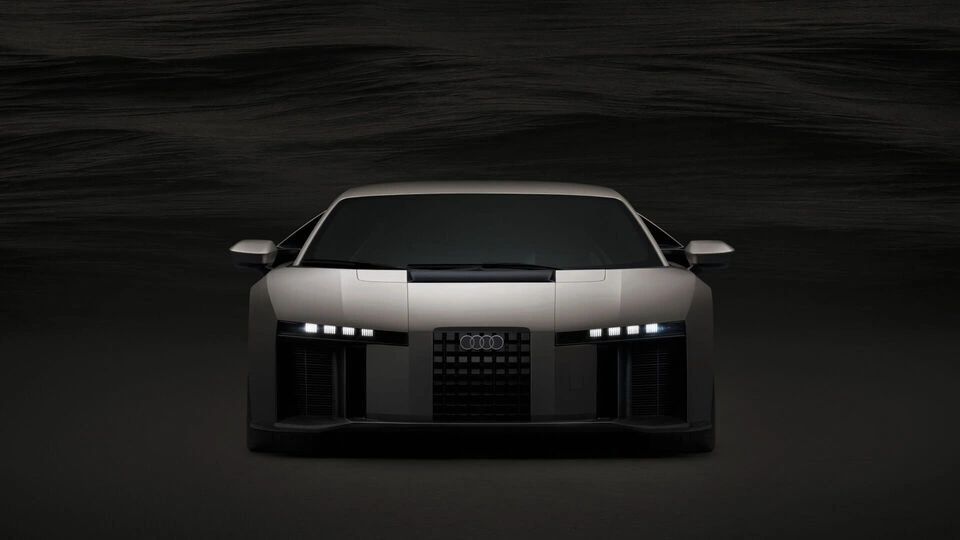
Check out the newest Audi Nuvolari, the fastest production car from Audi ever. They unveiled it recently, only 405 days after CEO Gernot Döllner greenlit the project. He formed a team right away to make sure this wasn’t just some concept car.
This is real, and it just debuted before the Monaco Grand Prix. Of course, it’s also their top hybrid performance car linked to their Formula 1 efforts. So it blends racing on the streets with what they do on the track now.
Don’t call it a reborn R8, even if it does share some parts with a contemporary Lamborghini, like the Temerario. With only 499 units made and each costing around £500,000, the Nuvolari is really stepping into new territory for Ingolstadt. It’s much different from both its Italian sibling and the mid-engined sports cars Audi made before.
This car shows how Audi wants to think and work quicker and bolder. Their ‘Vorsprung durch Technik’ philosophy is coming back strong to fight off growing competition from Chinese makers. Using their long history of building performance cars, and naming the car after a famous racing driver, sure is one way to show off their car-making roots.
The Temerario’s aluminum spaceframe chassis and petrol-electric powertrain form the Nuvolari’s foundation, but with upgrades for better performance, maybe even fidelity. It combines a 4-liter twin-turbo V8 with three electric motors, producing 80 more bhp than the Lambo, totaling 987 horsepower (or 1001 PS). This is the same as the Bugatti Veyron from 20 years ago. The engine on its own pumps out 789 hp and 538 lb-ft of torque, matching Lamborghini’s stats. Thus, the extra oomph comes from its electrical components, and we might see that familiar 10,000 rpm redline too.
Also Read : European BYD Dolphin G Spotted Showing Off Its Cabin Design
The Nuvolari has tons of boost and recovery modes thanks to its five drive settings. Using the extra juice from Launch Control cuts 0-62 mph down to 2.6 seconds, making it a tenth faster than a Temerario. Also, it goes from 0 to 124 mph in 6.8 seconds, and tops out beyond 217 mph. While the Audi RS e-tron GT claims to be a bit quicker, it’s probably way more exhilarating in this car.
Like the Lamborghini, it has two electric motors handling the front wheels along with another motor between the engine and the dual-clutch tranny. They team up with a smart all-wheel-drive system that constantly checks steering angle, yaw rate, grip, and acceleration to keep everything tight and responsive. When you switch between its five modes – E-Hybrid, Balanced, Dynamic, Dynamic+, and Track – the car gets progressively nimbler. In Track mode, you can turn off the traction control if you want, for those full-throttle fun times.
Rouven Mohr, Audi’s chief technical officer and someone evo knows from his work on many Lamborghinis, just gave me an exciting tidbit. “This is the first time we’ve got traction control that you can adjust using the steering wheel,” he said. “Four different levels let you switch between surfaces for top agility and driving pleasure.” Pretty cool, right?
Inside, the Nuvolari aims to be clean and easy-to-use, making driving the focus. Sitting in it, I could tell they really delivered on that idea. The seats hug you tight, and that big central start button makes a powerful statement. Compared to the older R8, the new car has more decisive paddle shifters, adding an awesome click-clack sound when you use them. You can tweak drive and traction modes via some nice metal dials on the Alcantara-wrapped wheel. Even the digital instruments feel sporty; the rev counter jumps all the way up to 12,000 rpm.
Also Read : Production Starts for the Volkswagen ID. Polo and Cupra Raval
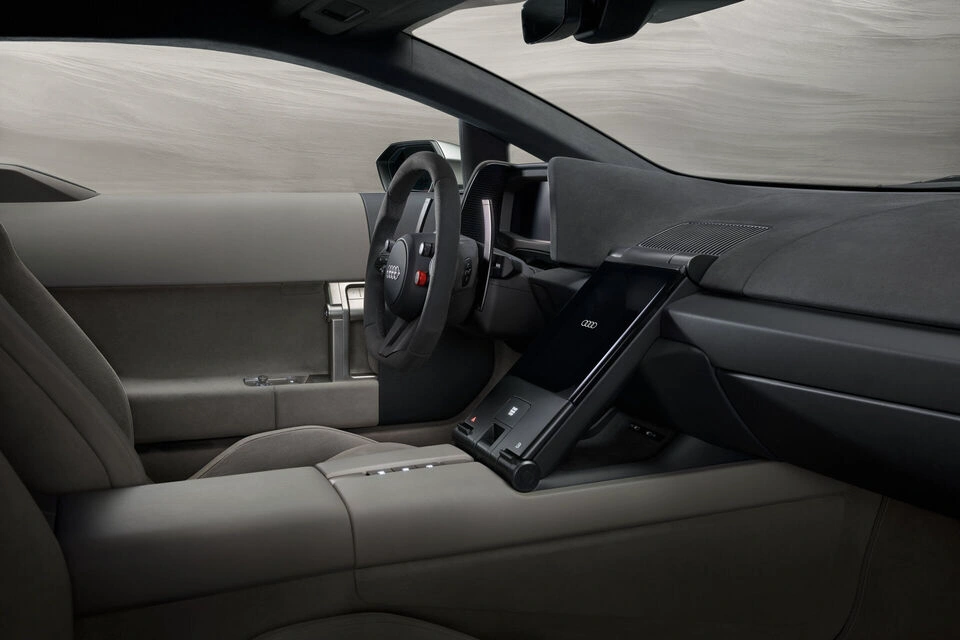
The air vents have more metal and super satisfying sliders. You don’t see much of the typical Volkswagen Group switchgear. Long trips won’t be your favorite because of the limited storage – you’re looking at stuffing things behind the seats and in the passenger footwell.
Braking here is by wire, paired with ‘Audi Ceramic Pro.’ Up front, there are huge 420mm discs and ten-piston calipers; 410mm and four-piston at the rear. Audi says the system can handle 2.8 megawatts, comparable to today’s F1 cars. To keep the brakes cool, the designers added vents beside the narrow headlights. The car rides on staggered 20/21-inch forged wheels with Audi-first center locks.
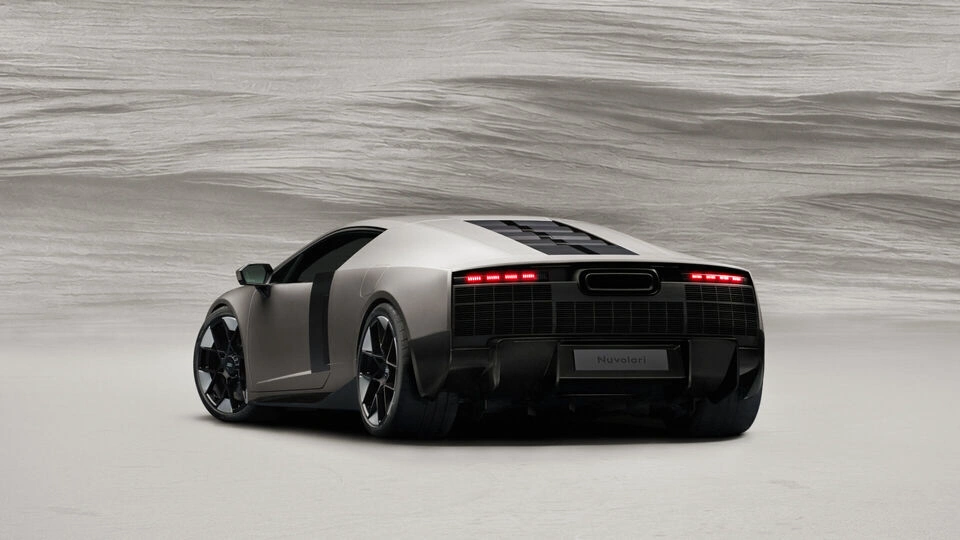
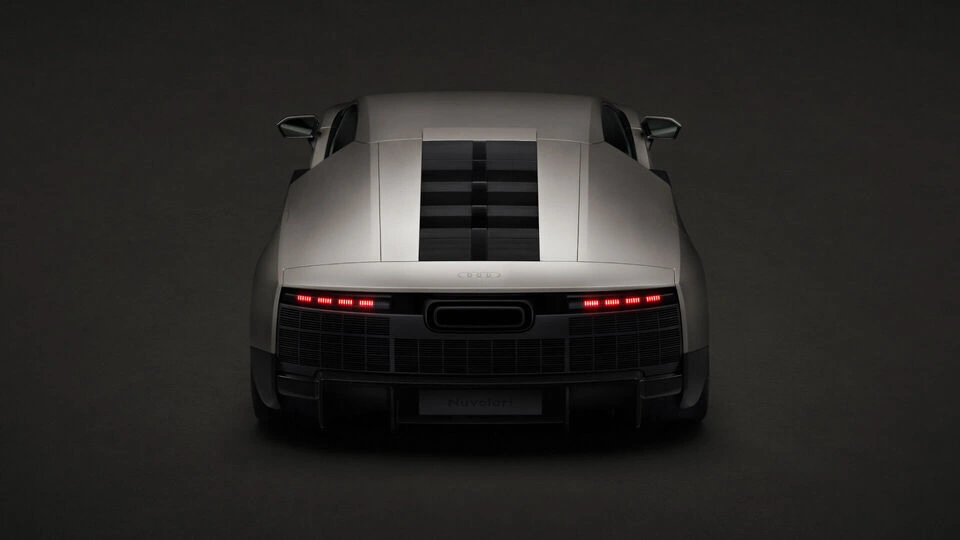
The new design helps this model stand out from the Temerario, especially thanks to its active aerodynamics. It features an S-duct up front that feeds into a rear wing. This wing shifts between three different positions while driving and as you change the drive modes. Plus, there’s a manually activated DRS mode on the wheel, giving it a tangible connection to Formula 1 tech.
Mohr states that it generates over 400kg of downforce. He’s proud of how they’ve embedded the Audi rings into the carbon rear wing too. These are made from milled aluminum and sit super flush. This ensures they don’t get in the way of the airflow for all their bold styling choices.
Audi also boasts about the car’s completely carbon body. Something pretty cool is that its final assembly happens in Modena, done by the CPC Group. This is where very lucky buyers come to greet their car after it’s built. Even with the carbon construction speeding up development, it hasn’t made the vehicle lighter. Audi says it weighs ‘sub 1750kg’ without fuel or fluids, compared to the Lamborghini’s 1690kg.
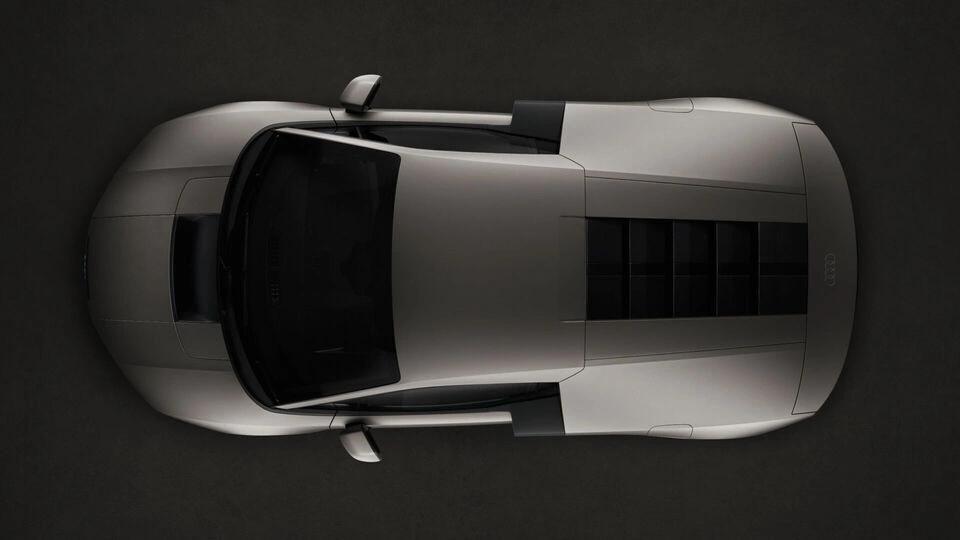
You can choose body panels in visible carbon, but this particular car is painted in Audi’s new Titanium hue. This color’s also used by its F1 racer and a recent concept model – the Nuvolari takes the place of the Concept C as the first production car of Massimo Frascella, Audi’s chief creative officer. Frascella assures that each design part has a purpose. He explains, “The perfect example is the vertical frame on the front. Those 64 tiles direct airflow from the front all the way back to the wing.”
The sideblades get a redo, paying homage to the very first R8. Shaped using computer fluid dynamics, they help Frascella create rear sections that recall Audi’s classic looks. “We’re not just looking back for nostalgia,” he clarifies. “It’s about understanding our roots and where we fit.” Although these blades aren’t as sleek as their inspiration, their rugged look suits them. Plus, the dramatic reveal when sliding your hand into the door to open it makes you feel like you’re right at home in a supercar.
Döllner gives credit to the Lamborghini core for the speedy development of the Nuvolari. “I don’t have to use ‘China speed’ anymore,” he says with a smile. “For the next project, we’ll be working at Audi speed.”
Production kicks off in early 2027, with car deliveries happening sometime in the first half of that year. The Nuvolari comes with a unique, personalized customer experience befitting its cost, and Audi wants to use this method for future projects as well. You can picture Döllner’s team already considering the possibility of making a Nuvolari Spyder next.
Coming right after the Mercedes-AMG GT 4-Door and the Ferrari Luce, the Audi Nuvolari takes a different angle for a plug-in halo car, especially with just ten miles of electric range. Plus, the name itself is super emotional. Tazio Nuvolari’s successes inspired Auto Union to create their revolutionary mid-engine racers, and Porsche once called him “the greatest driver of the past, the present, and the future.”
“In some cases, history or legacy might be a burden,” Döllner finishes, “but there are times when it provides an incredible advantage.