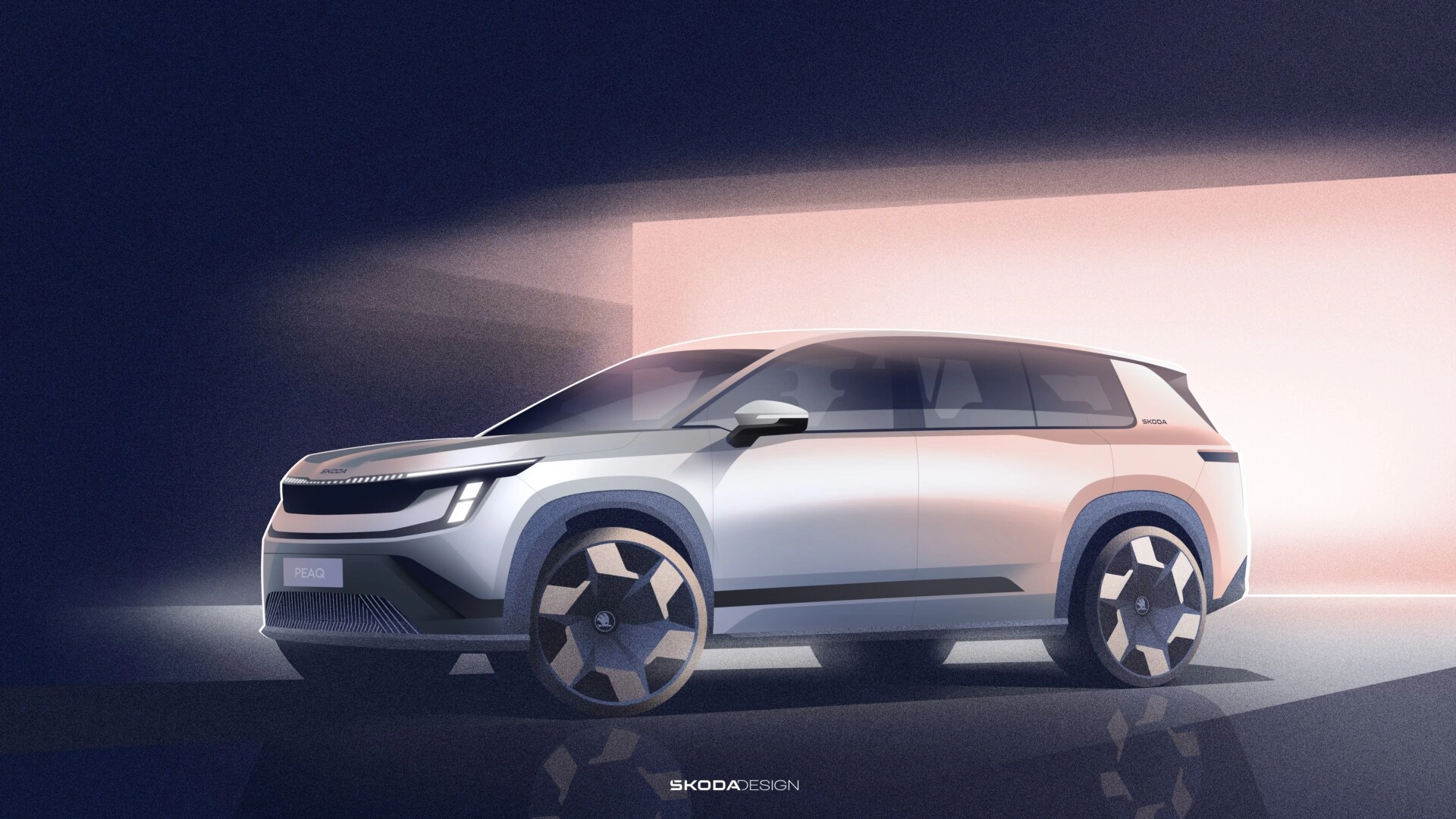
With Skoda trying to get the whole international automobile industry to pay attention to its electric future, although it still has no actual physical car yet, the manufacturer released some official exterior design renderings of their latest flagship electric vehicle, which has been dubbed Peaq. As per the press release, the new seven-seat family cruiser is going to have its official global premiere on June 23 during a special media event taking place in France.
As opposed to its other electric vehicles, Peaq does not feature a naming scheme similar to those previously released models. While the manufacturer has already rolled out some electric models called Enyaq, Elroq, and the smaller Epiq crossover, they decided not to make all the upcoming cars have a similar prefix, which may sound rather repetitive to international buyers of electric automobiles.
Official design lines suggest that this particular design era represents a major evolution in the brand’s distinctive styling language referred to as “Modern Solid”. In essence, this particular design philosophy emphasizes flat surfaces of the body, absence of complex character lines, as well as chiseled silhouette. The profile looks very similar to that of the Vision 7S concept car introduced in 2022, although the production version gets rid of more extravagant elements characteristic of the latter vehicle such as rear coach doors.
In terms of its front end styling, the vehicle features tall clamshell hood as well as extremely thin LED headlights creating a distinctive T-shaped illumination pattern. Such headlights embrace a glossy black front panel referred to as Tech-Deck Face by the company. Regarding the back end, the vehicle features very similar razor-thin taillights blending seamlessly with the rear tailgate, as well as twin-finned roof spoiler positioned above the rear glass. Short hood and minimal body overhang result in highly practical square-like proportions, almost reminding of a passenger van.
Also Read : Production Starts for the Volkswagen ID. Polo and Cupra Raval
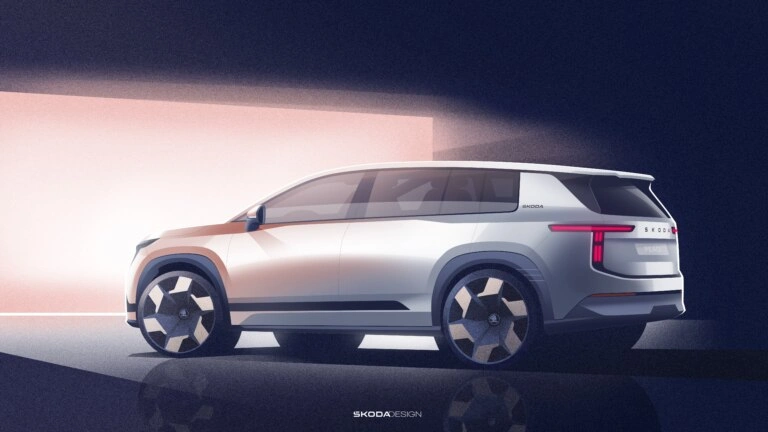
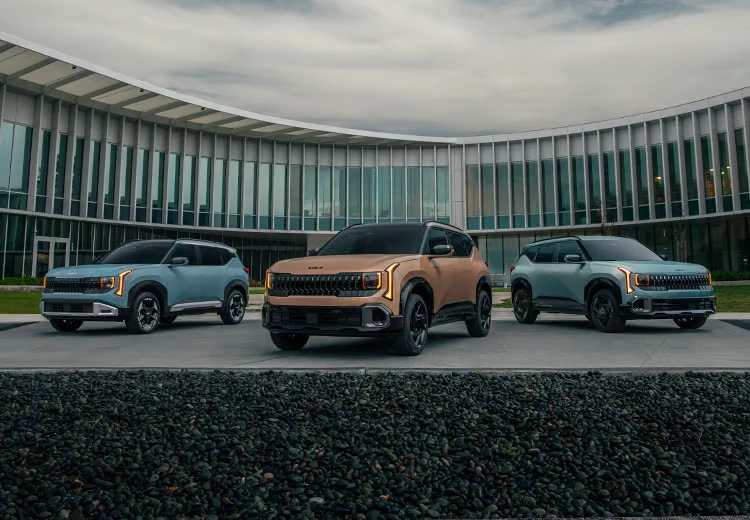
Generous dimensions fully characterize the new family car. Zero emissions ensure that the new model is nearly 4.9 m long and that it is undoubtedly the biggest passenger vehicle in the corporate lineup. Such a large-size design gives an edge in terms of the size to its main competitor on the market, Peugeot E-5008, although it takes up slightly less space than other monster-sized electric cars like the Kia EV9 and Hyundai Ioniq 9.
As for what is under the hood, the SUV features a heavily updated version of the MEB platform developed by Volkswagen Group. It is notable that, before now, the said mechanical configuration was used only for passenger cars produced and sold in China.
Once the Peaq launches officially sometime in the latter part of this year, buyers will be able to select between two battery and motor variants. The base model, which is known as the 60, comes with a 63 kWh battery coupled with a 201 hp electric motor at the back end. With this configuration, it offers a relatively good driving range of roughly 430 kilometers.
Also Read : European BYD Dolphin G Spotted Showing Off Its Cabin Design
On the other hand, the top-of-the-line model comes with a massive 91 kWh battery. Buyers can opt for the high-end configuration by choosing between the single-motor rear-wheel drive and dual-motor all-wheel drive options. The latter configuration comes with a peak performance of 295 hp. With this powerful combination of batteries, one could enjoy a driving range that can extend up to 610 kilometers.
The DC charging rate depends on the particular battery version purchased by the buyer. While the big battery with a 91 kWh capacity supports high-speed charging up to 195 kW, the small battery is charged until it hits 160 kW. Due to the disparity in the capacities of the two storage batteries, both of them take about equal time to reach full charge. It takes 27 minutes to reach 10-80% charge on the small battery pack and 28 minutes to reach full charge for the large one.
Though the car will be offered in an expansive premium category, the management is keen to uphold its reputation of providing excellent value for money. The marketing team plans to price the vehicle significantly lower than other large premium cars in the seven-seater category. For instance, the new model from Kia goes at a starting price of €77,400, while its competitor from Hyundai has a beginning price tag of €76,200 in the UK. Skoda’s new electric model will have a beginning price closer to the smaller model from Peugeot at €47,000.
It is important to note that this pricing tactic does not indicate that the interior of this product will be cheap and not finished. The interior development managers say that the corporation made a tremendous effort to raise the level of luxury of this part of the car interior. Unlike other luxury cars, which use very costly materials, the designers used cost-effective but highly durable and recyclable components. The cabin produced will come in both five-seater and seven-seater versions.