
Toyota Circular Factory Turns Old Alloy Wheels Into New Engine Blocks
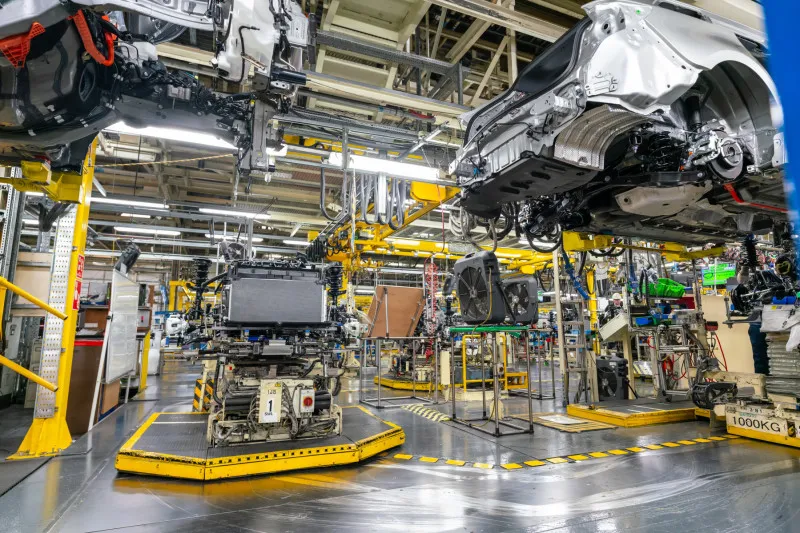
There has been a radical revolution within the automobile industry, as companies move away from conventional manufacturing methods towards sustainability. The most revolutionary example of such innovation in practice can be seen with the creation of Toyota’s Circular Factory, which has been launched by Toyota Motor Europe. This revolutionary process revolves around the idea of reusing recycled materials in the manufacture of automobiles.
For many years now, car production has been done using a linear approach, whereby cars would be produced using raw materials, only to be scrapped away after their lifecycle. But the automobile giant, Toyota, is changing all this by employing circular manufacturing in car production. This is being done in Burnaston, UK, where the company has set up what has come to be known as the first Circular Factory.
Also Read : Porsche Cayenne S Electric Debuts As A High-Performance Luxury Electric SUV
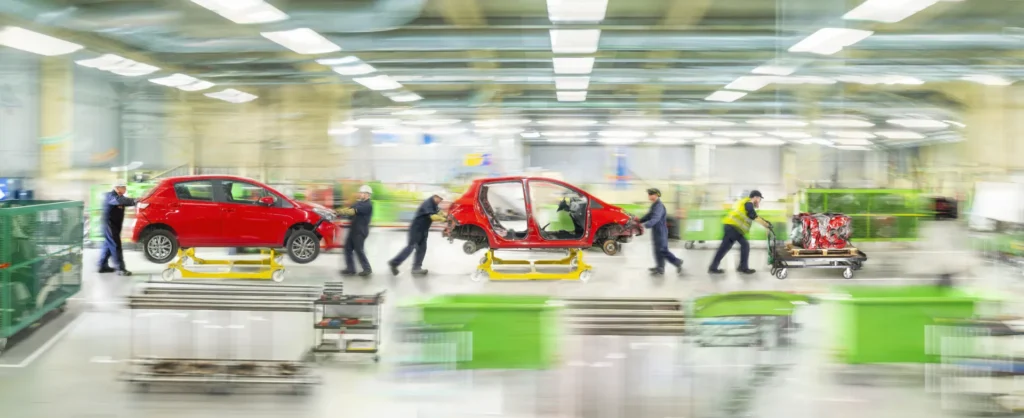
Among the remarkable processes in this case is the recycling of aluminum from the alloy wheels. Instead of disposing of them, the wheels are taken through a processing stage, and subsequently delivered to Toyota’s Deeside engine manufacturing plant. The recycled aluminum is then used to manufacture engine parts. The manufactured parts are delivered back to the Burnaston plant to be fitted in newly made cars like the Corolla car.
The Circular Factory is not only limited to its recycling processes but uses the well-known Toyota Production System backwards. Cars are disassembled carefully one step at a time starting with precautions like airbag inflation and fluid evacuation. The materials used in making cars including metals and plastics among others are then categorized and tested. This helps Toyota know how the materials perform over time and how to reuse them effectively.
Another advantage of this approach is its positive impact on the environment and sustainable development. In fact, thanks to recycling, Toyota does not need natural resources, produces less carbon dioxide emissions and creates fewer leftovers. This corresponds to the objective set by Toyota to become carbon neutral in Europe by 2040.
Finally, information obtained through the operation of the circular factory will allow Toyota to develop cars that can be easily repaired, dismantled, and recycled in the future.
It should also be noted that this idea is going to be implemented by the Toyota Company beyond the UK since the company is building its next Circular Factory in Poland. This proves that circular production is one of the essential aspects of the automobile industry of the future.
Also Read : Ford GT Mk IV – The Ultimate Track-Only Supercar from Ford Performance
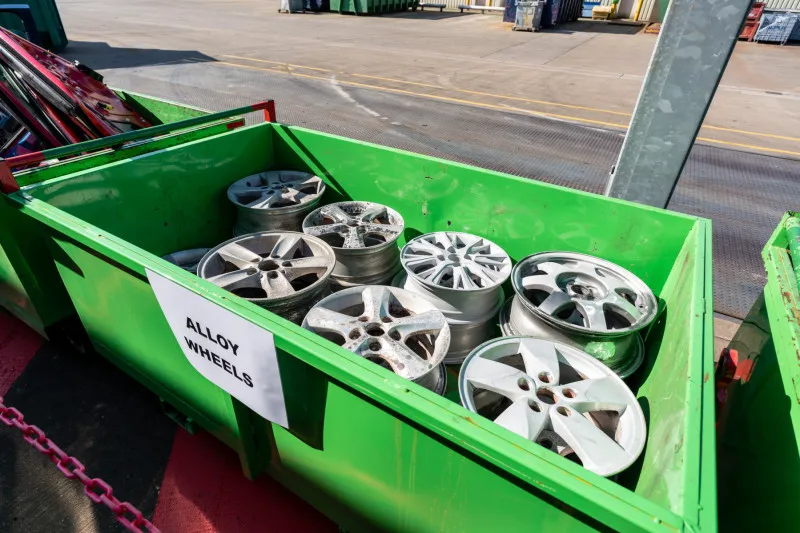
To summarize, the Toyota Circular Factory demonstrates how the automotive future may look like. By transforming scrap aluminum wheel rims into usable parts for engines, Toyota proves that waste can be effectively recycled to benefit the automobile industry.
| Aspect | Details |
|---|---|
| Initiative Name | Toyota Circular Factory (TCF) |
| Company | Toyota Motor Europe |
| Location | Burnaston, UK |
| Main Concept | Recycling end-of-life vehicles |
| Key Material | Aluminium from alloy wheels |
| Process | Wheels → Recycled Aluminium → Engine Components |
| Final Use | Installed in new Toyota Corolla cars |
| Benefits | Reduced waste, lower emissions, less raw material use |
| Future Plan | Expansion to Poland |
| Goal | Carbon neutrality & circular economy |