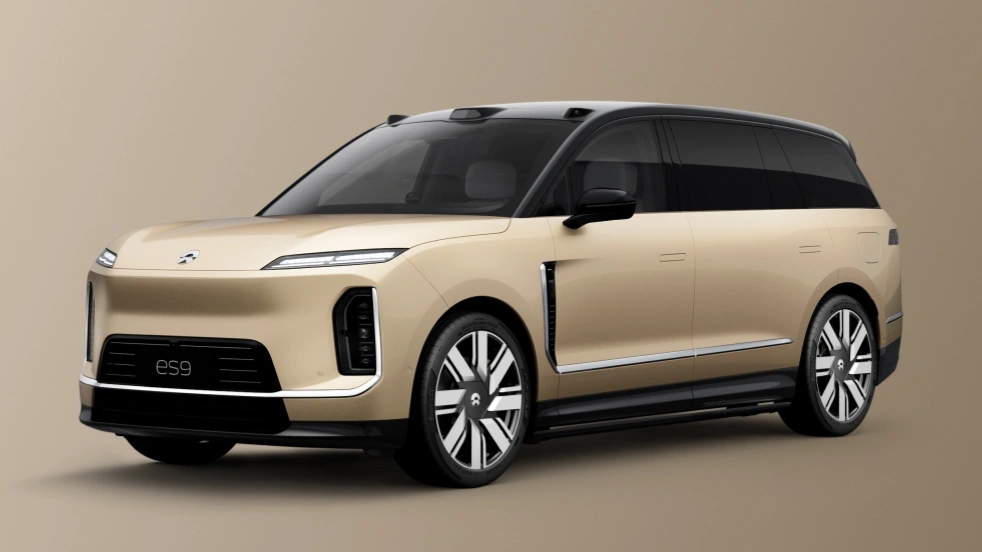
The new ES9 was unveiled today by NIO, which is an executive-level sport utility vehicle (SUV) from NIO. This vehicle represents the biggest ever manufactured SUV using battery power in China. Its dimensions are 5,365 mm (17.6 feet) in length with 3,250 mm wheelbase and it features 520 kW (697hp) of power along with 620 km (385 miles) CLTC range.
Its price turned out to be lesser than what had been predicted for the pre-order phase that started in April, with base Executive Premium Edition costing just RMB 498,000 (~$69,000) or even RMB 390,000 (~$54,00
The pre-sale launch in April was set at RMB 528,000 for the most basic ES9 trim. Officially, the launch price is cheaper than the pre-sale one, coming in RMB 30,000 ($4,100) less across all trims. It shows NIO’s aggressive pricing strategy aimed at gaining market share in China’s competitive automotive market.
Let us have a look at NIO ES9’s prices:
Executive Premium Edition – RMB 498,000 ($69,000), or RMB 390,000 ($54,000) with BaaS. Executive Signature Edition – RMB 558,000 ($77,000), or RMB 450,000 ($62,000) with BaaS. Horizon Edition – RMB 628,000 ($87,000), or RMB 520,000 ($72,000) with BaaS.
As seen from the figures above, battery-as-a-service pricing makes the ES9 more affordable, starting from RMB 108,000 ($15,000) cheaper. This is important because NIO’s electric SUV goes up against such direct competitors as BMW iX or Mercedes-Benz EQS SUV, priced starting at $80000.
Also Read : 2028 Ferrari Luce First Look: Ferrari’s First EV Breaks New Ground
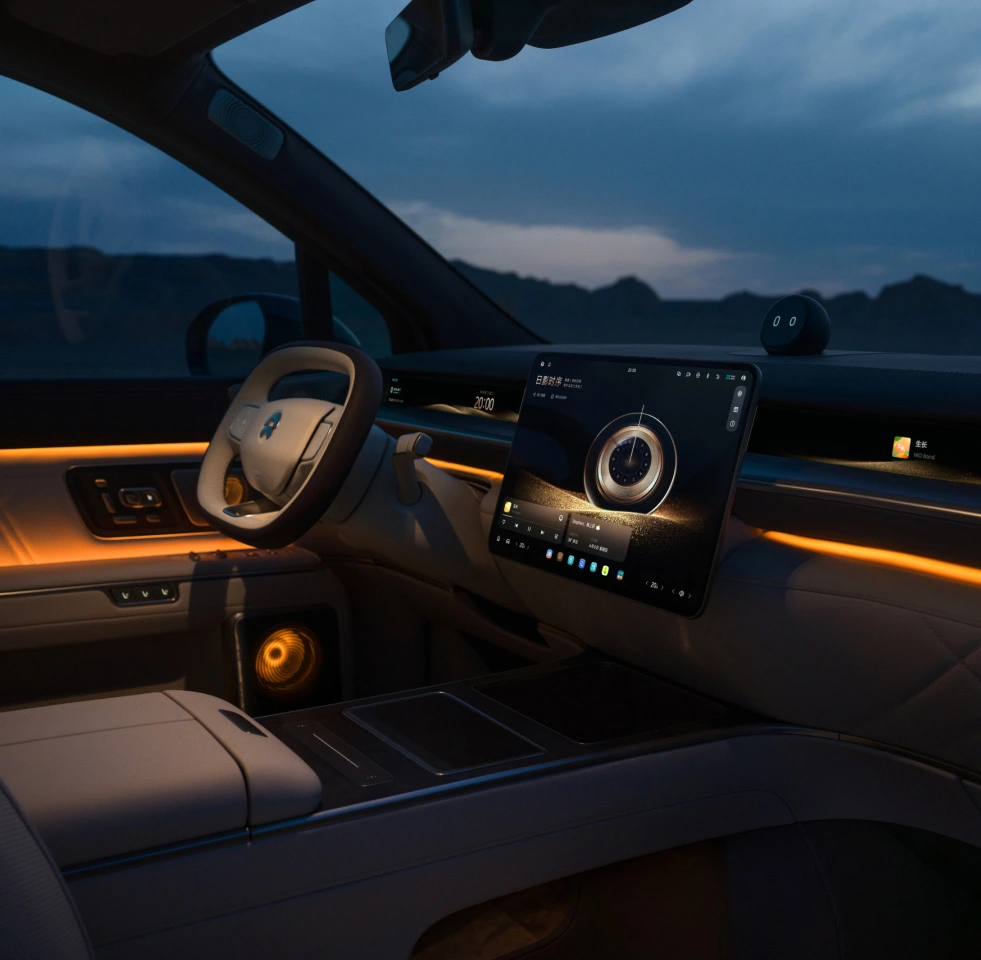
Based on NIO’s next-generation high-voltage platform with a voltage of 900V, the ES9 supports 5C ultra-rapid charging while also maintaining the company’s 3-minute battery swap capabilities. NIO promises to deploy more than 1,000 Power Swap Stations this year, including fifth-generation stations available by Q3 2026.
As far as its performance capabilities go, a dual-motor all-wheel drive setup produces 520kW (697hp) and provides up to 700Nm of torque, allowing for a 0-100km/h sprint in just 4.3 seconds. The car comes equipped with a 102kWh CATL battery pack, giving a CLTC range of around 620km – which is approximately 385 miles, although actual figures will differ.
NIO boasts of more than 40 industry-first technologies in its ES9 model. These technologies include a 5nm smart driving chip (NX9031), 48V Integrated Hydraulic Fully Active Suspension, Steer-By-Wire (SBW) with Rear Wheel Steering with a turning radius of 5.4 meters, and 47-speaker LYRA audio system delivering 3,020W of power.
When it comes to the smart driving features, the car is equipped with 31 sensors and Navigate on Pilot Plus (NOP+). This feature uses NIO’s WorldModel technology to navigate tidal lanes and reversible lanes, a dynamic traffic management system in which one-way lanes are reversed based on peak commuting hours.
The ES9 comes at a massive 5,365mm length, making it China’s longest BEV SUV, with its length only 332mm shorter than the Escalade IQ yet boasting an even greater wheelbase than the Escalade IQ by a margin of 179mm. This translates into a spacious cabin that is over 2,805mm in length, and more than 1 meter of headroom on all three seats rows.
Also Read : Mercedes-AMG CLE Mythos Loses More Disguise Ahead of Its Debut
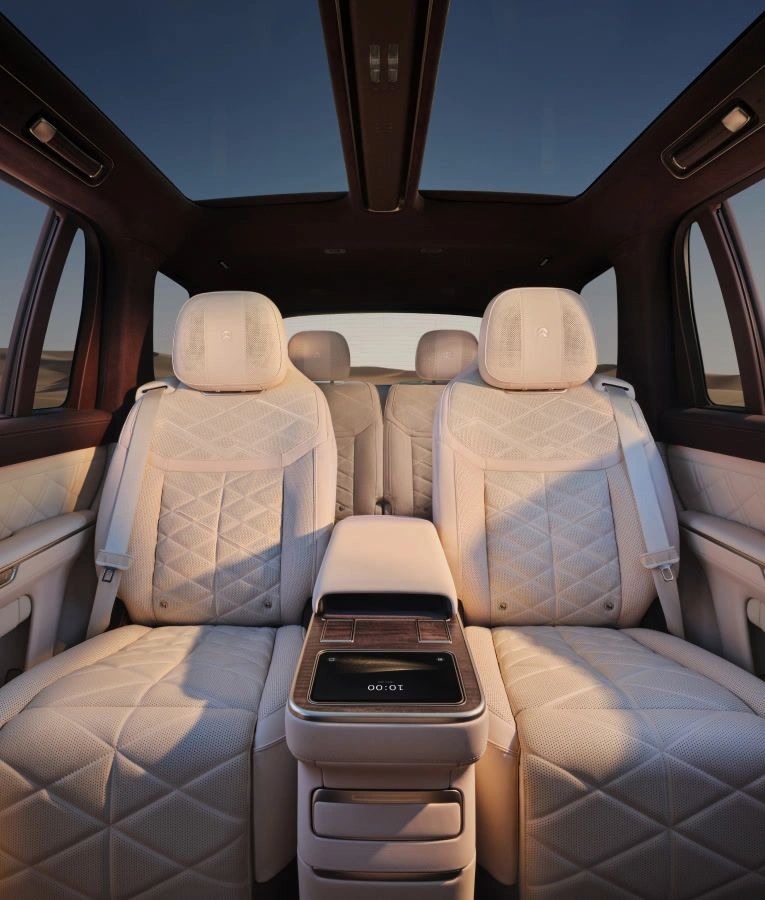
Second row seats are equipped with zero-gravity executive seats that feature a 42-point massaging system along with NIO’s liquid crystal smart dimming windows that are claimed to be the world’s first array-based smart dimming windows that can turn from clear to opaque within a mere 17 milliseconds. The executive console is fitted with dual 16 inch displays, conference system, and a magnetic tea tray.
The ES9 holds a special place within its category. While the ES9 is in direct competition against the BMW iX and the Li Auto L9 in China, none come close to offering the size of the ES9.
Outside of China, the closest comparisons come from the Mercedes-Benz EQS SUV (about $85,000 in the US market), which can be compared to the Cadillac Escalade IQ, coming at a price tag of over $130,000. The BMW iX xDrive60 comes close in terms of cost and range (approximately $93,000 and up to 364-mile range), however, the car is considerably smaller and does not offer three-row seating.
It would seem that NIO’s battery-swap capability continues to be its most significant competitive edge. The company recorded a record of almost 176,000 battery swaps per day and already passed 100 million battery swaps in total. With regards to such a big SUV, a 102 kWh pack swap in under 3 minutes beats sitting for a charging session.
There is no certainty regarding the uptake of battery swapping technology outside of China.
It arrives at a particularly crucial time for NIO as the company experienced a sharp drop in sales growth from 98% year-over-year during Q1 2026 to just 22.8% in April. In response, NIO’s CEO, William Li, has highlighted the importance of the ES9 and ONVO L80 in driving the remainder of 2026.
While NIO has hit the impressive milestone of delivering over 1.1 million cars, its bottom line still has not materialized. As an executive-level car, the ES9 has the potential to increase NIO’s ASP and gross margin at the same time.
Yao Ming, former basketball player and now Chief Experience Officer of the ES9, attended the launch event.
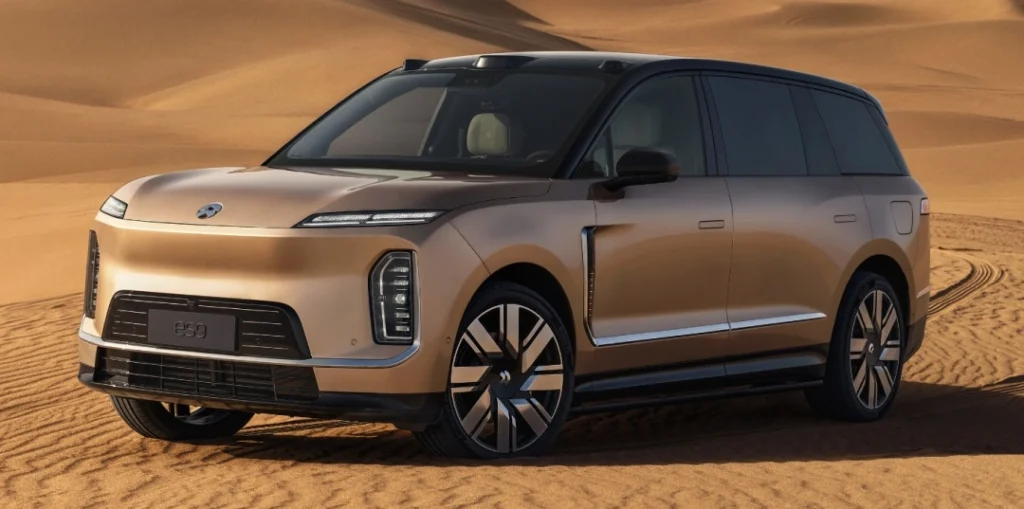
It’s hard to imagine a better flagship model for NIO at this point in time. It truly packs some serious power, ranging from 520kW, 620 km range, 900V architecture, 5C charging to the ability to exchange the battery in 3 minutes while keeping its size equivalent to the Escalade. The price is even more aggressive than one could expect since it sits RMB 30,000 lower than what was promised at pre-sale stage seven weeks ago.
Still, this has happened before with NIO. While the company consistently produces technically outstanding cars and creates buzz around launches, it has yet to produce the volume and profitability that investors are eagerly waiting for. With an average price tag of RMB 498,000+ the ES9 will not be a volume product but rather a halo car, and the critical question is about its ability to attract users to the NIO ecosystem.