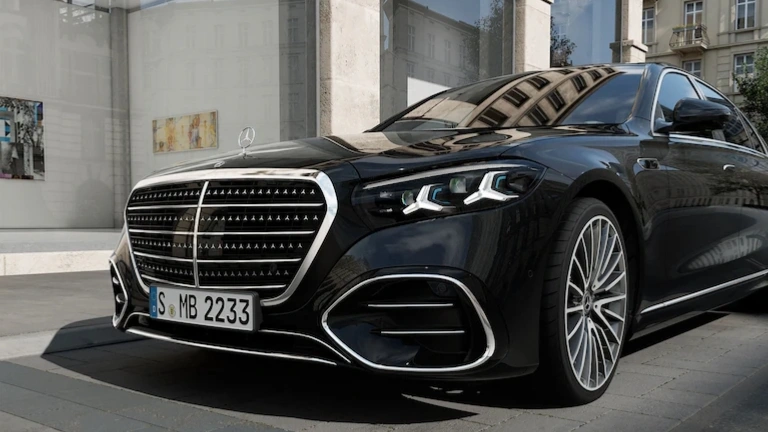
The newest Mercedes-Benz S-Class marks 140 years of its brand name, and although modifications are small, they help it become one of the best models in a rapidly declining market
Mercedes-Benz S-Class has always been synonymous with luxury in the saloon car market from when it first debuted, and that’s not surprising considering how long it has existed. The Volkswagen Golf has shown that once a vehicle loses its edge in the market due to inferiority to other models, class dominance becomes a thing of the past, but Mercedes has held on despite its rival, the BMW 7-series, coming close over time. In celebration of its 140th anniversary, Mercedes has updated its S-Class model. We had the opportunity to drive the upgraded model in Germany.
Also Read : Ravage Tarmac Master Reinvents the Alpine A110
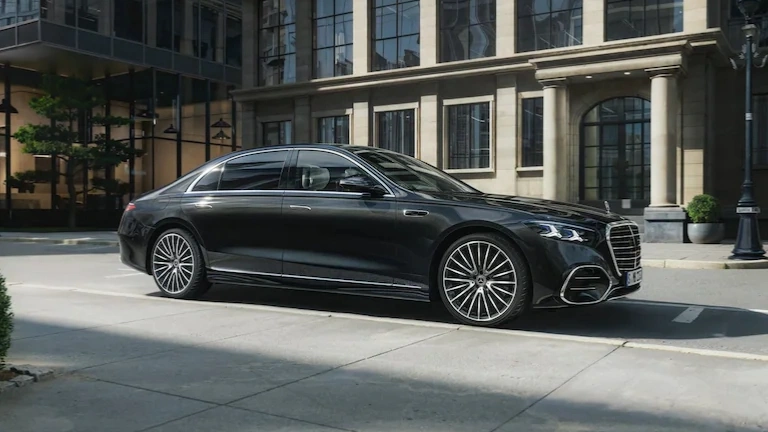
Mercedes has claimed that more than 50 percent of the car has been updated, although you wouldn’t be able to tell this by looking at it. That is to say, the car is everything it was before, just better – a lot better – to ensure it keeps up with its main competition: the updated Neue Klasse BMW 7-series. The Bavarian model has created waves with its excellent performance numbers and design upgrade.
Engine, transmission, and technical features
Strangely enough for a brand new car that was unveiled in 2026, there is an all-new engine available, and it is a V8. M177 Evo engine will appear in several fully-fledged AMG models in the following years, yet its initial application is in the luxury sedan presented in our picture. And it has to be stressed that unlike all the other V8 engines used in the S-Class, this one is not a crossplane crankshaft type; it is flat-plane.
Unluckily, it seems that the S580 V8 S-Class won’t be available in the UK, but first impressions of what we are likely to get are promising. The engine options start from 3 litres of petrol and diesel engines and end up with the V8 option, including the mild-hybrid S350d at 308bhp, the plug-in hybrid petrol S450e at 429bhp, S500 petrol with 3-litre straight-six engine tuned to 443bhp, and the top-range S580e with both the 443bhp straight-six and plug-in hybrid system resulting in total 577bhp. There are no AMG versions yet, but the new V8 engine with 530bhp and plug-in hybrid system sound very impressive.
However, the technology doesn’t stop at the V8 engines. Every model of S-Class comes with a water-cooled ‘supercomputer’ with a massive task of processing information collected by all control units in the car. Instead of having several processing units that could cause some delays, there is a single computer responsible for everything installed in the car. This NVIDIA computer uses four radars, cameras, and 12 ultrasonic sensors collecting data for a better understanding of the current situation by the car and its driver. Moreover, it also allows the car to drive itself on Level 4 using
Also Read : Zeekr 8X Ultra Plus Tested – 885 HP Hybrid SUV Heads to Europe
Performance, ride and handling
The V8 may not have made its way to our shores, but none of the S-class variants is lacking in terms of power. The mild-hybrid system helps bridge any weaknesses of the combustion engines, while the plug-in hybrid model offers no shortage of power off the line either. C/60-mile EV range is also useful to have. Low-speed acceleration is buttery-soft, as is expected from such a vehicle, with the OM 656 Evo diesel straight-six as good as ever. The more powerful S450d variant sadly doesn’t make its way to the UK, but the lower-tuned S350d still has 479 lb ft on tap for more than enough torque – the only difference between them comes from the ECU, as they both share the same engine parts.
The nine-speed automatic transmission feels fluid and unobtrusive under normal driving conditions, although the latter becomes less true with increased speeds and lesser power, where the gearbox hunts for gears with less finesse than you’d hope when additional power is requested. Fortunately, that is not a problem with the 577bhp S580e or the V8-engined S580 variant.
The handling is excellent in terms of measurement and reliability for this car’s category, providing good dynamics and control that are well-damped to deliver the comfortable journey that passengers expect. The S-class isn’t a car to go on for a quick drive around town, but when you come across such opportunities, this car will make the most of those stretches by driving swiftly without becoming unmanageable. There will be no need to reduce your speed at the tightest hairpins, thanks to 4.5 degrees of rear-wheel steering being included as standard, while 10 degrees can be added as an option.
This is useful not only because it helps to easily navigate through tight corners but also because it adds stability at higher speeds. The rear wheels align themselves with the front wheels during such situations, as I experienced when changing lanes at its highest speed limit of 155mph on the unrestricted autobahn, where it performed as confidently as it did at 70mph.
Chassis setup also adds to that feeling of solidity, and this is again very typical of S-class cars. While it does not offer that surreal, magic carpet ride of something like a Rolls Royce, S-class offers a suspension system that takes the car beyond what ordinary saloons offer in terms of insulation from the road. While there might be larger bumps entering the cabin, Mercedes says that its ‘Cloud based damping’ will learn to adapt over time. Also, other Mercedes Benz cars will transmit information regarding imperfections ahead, allowing the car’s suspension system to prepare accordingly before reaching them. Electrohydraulic E-Active Body Control option gives further stability on twisty roads by levelling the car as it happens on a Porsche Panamera. It does so quite effectively, but leaves that strange sense of disconnection from the force applied on the tyres behind.
Smooth stops are one of the aspects of any luxury saloon, but are often ignored. However, in the case of S-class, it manages to deliver just that. In case of plug-in hybrid versions of the car, the regenerative braking system combined with normal friction braking produces an almost perfect braking calibration, with an extremely smooth performance right from the
Also Read : Tesla’s Cheapest Model 3 Ever Is Now on Sale in Canada
Interior and tech
It is the interior of the new S-class where its weaknesses appear. It is dominated by ‘MBUX Superscreen’, the largest screens that are supposed to be at the centre of the whole facelift project: two screens sized 14.4 and 12.3 inches are used here, all being covered by a single glass panel. In reality, however, the latter only cheapens the S-class in question, offering practically no benefit to drivers. While the system works well, its design reminds that of Windows Vista (or worse), making S-class lag behind BMW 7-series in this regard. The effect of using the three-dimensional display in this context is a nice touch, but it cannot replace the depth of quality lost because of ‘Superscreen’.
Fortunately, rear passengers would not need to deal with said screen either: instead, they will be able to enjoy the best out of the luxury class seating experience, including ultra-comfortable seats that can be cooled, heated, massaged and converted into lying-flat positions. Even though seats may look ordinary, there are still heated seat belts to be found thanks to the ‘thermal comfort’ pack option, along with two nice remotes dedicated exclusively to passengers if the rear entertainment screens with integrated cameras are
The overall interior design of the car is very good, although not anything we haven’t seen before on other S-class models. If you choose the silver carbon fiber design package, which isn’t too attractive anyway, and instead select the open-pore wood interior trim option, then the cabin of the Mercedes S-Class will look great (except for the display screens). The plastic seat adjustment controls that sit on the side of the doors do give off a cheap feeling, as well as the buttons inside the steering wheel, which seem to creak and flex during use.
Price, specs and rivals
However, Mercedes-Benz’s new S-class starts at £103,450 for the S350d in the UK, £17,610 higher than the aged Audi A8 and only slightly higher than the outgoing electric version of the BMW i7. However, the new BMW 7 Series is coming soon, and it is expected that the model will be priced lower than the S-class.
Stepping up the ladder of the S-class range, the S450e L will offer additional space, a more powerful 321bhp straight-six petrol engine, and plug-in hybrid capabilities in exchange for the price of £114,725. For an additional £1,300, one will be able to buy the more powerful S500L, which is equipped with a stronger 443bhp engine and does not use plug-in hybrid capabilities, and for a further increase of around £6,000 to £122,425, one may buy the S580e, which offers the same engine but has hybrid capability installed. In all Mercedes cars, there are different trim types to choose, depending on one’s preferences.
In contrast to the rival, BMW, Mercedes-Benz offers the S-class as a standard model and holds on to the EQ line; hence, there will not be any electric version of the S-class yet. The nearest competitor is, therefore, the EQS starting at
| Engine | 3-litre twin-turbocharged straight-six & electric motor |
| Power | 577bhp combined |
| Torque | 553lb ft |
| Weight | 2618kg |
| Power-to-weight | 220bhp/ton |
| 0-62mph | 4.4sec |
| Top speed | 155mph |
| Basic price | £122,425 |