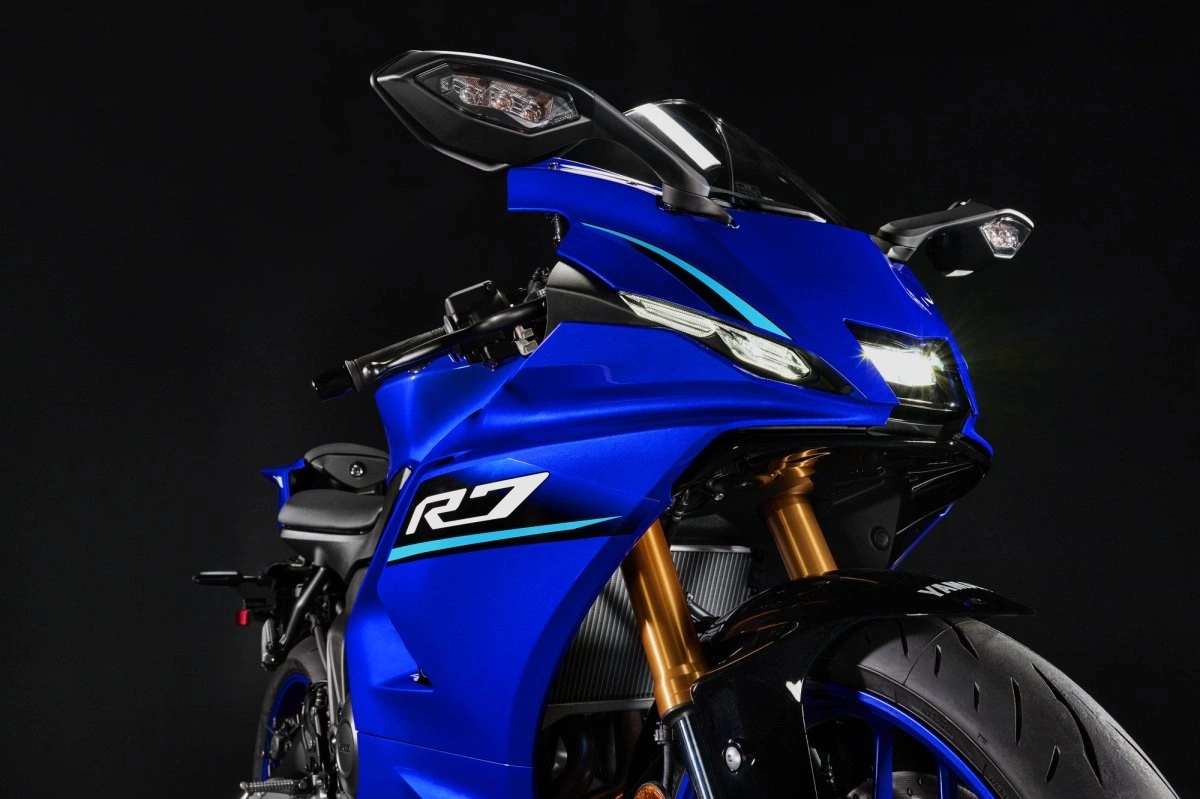
The Yamaha YZF-R7 sports a CW-dyno validated 65 hp engine, which is also fitted on the adventure bike Tenere 700 and naked MT-07 bikes. The Yamaha R7 came into the market as an affordable option for those who wanted a sport bike and managed to win many hearts. However, this time around, Yamaha has kept the versatile engine as before and improved everything else related to the bike’s sporty performance.
With all the classes becoming progressively more docile, Yamaha’s R7 manages to tug at the heartstrings of die-hard supersport enthusiasts with its body shape resembling the classic inline-four 600s but with mass appeal. The R7 was Yamaha’s top-selling motorcycle model in 2025, and it seems set to repeat its feat in 2026.
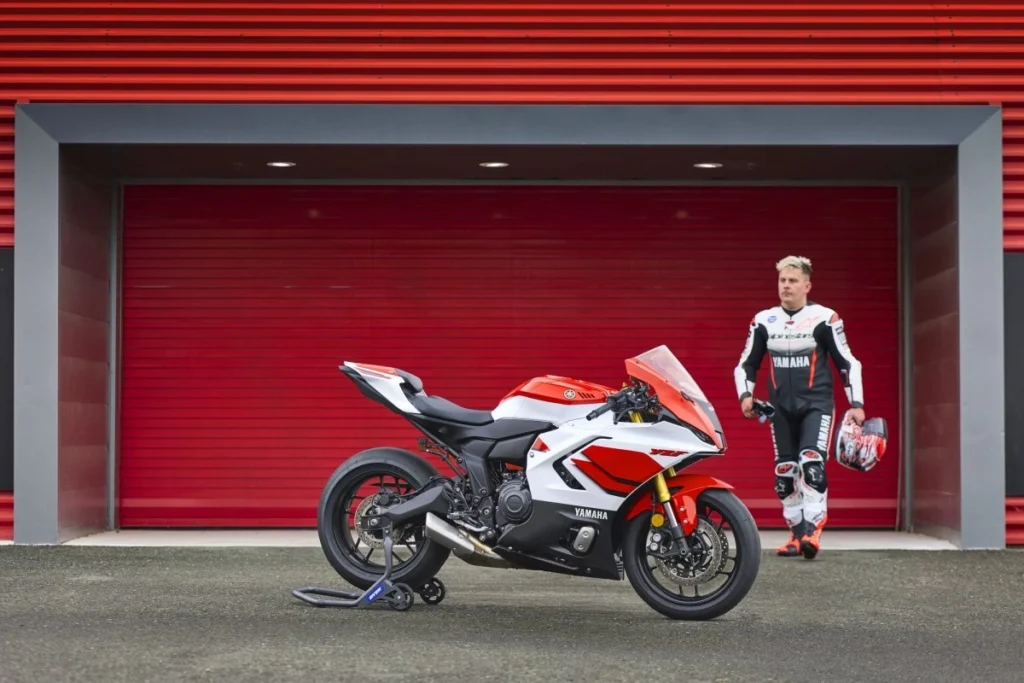
The Yamaha has been very successful with the parallel-twin middleweight lineup. With a good combination of power, personality, and rideability, the CP2 engine has been a great starting point for Yamaha, first introduced in the 2015 FZ-07/MT-07, then the XSR700 and Tenere 700, and finally the 2022 YZF-R7. Yamaha uses the 689cc parallel-twin in the R7 – one engine for almost any kind of rider.
Although the Yamaha did not invent the cross-platform sharing, it has done a very good job with the CP2 engine, and pretty much all other manufacturers have followed their footsteps. The Suzuki provides a wide range of middleweights driven by 776cc parallel twins – GSX-8S, GSX-8R, and GSX-8T, GSX-8TT, and V-Strom 800DE.
With a $9399 price tag, the Yamaha R7 competes in the middle class alongside the Kawasaki Ninja 650 Non-ABS ($7599), Triumph Daytona 660 ($9195), Honda CBR650R E-Clutch ($9199), Suzuki GSX-8R ($9699), and Aprilia RS
However, while Yamaha sticks to the 689cc dohc liquid cooled, cross plane crank engine with six-speed transmission for R7 motorcycle, changes have been made to its transmission system. In gears 1, 2 and 3, there is one more dog added increasing the number from five dogs to six. In gears 4, 5 and 6, the angle of gear dog has been modified in order to decrease gear lash. Clutch actuator has been moved ahead by 35 degrees, which was first introduced in 2025 Tenere 700.
Now, the R7 has adopted Yamaha Chip Controlled Throttle (ride-by-wire) technology that enables this motorcycle to provide several riding modes and throttle maps. There are three default modes namely, sport mode, street mode, and rain mode. In custom ride mode, riders can customize settings including power, traction control (TC), slide control (SC), wheelie control (LF), and engine braking (EB). It is also possible for riders to deactivate TC, SC, LF, and rear ABS completely if they want.
Phone connectivity enables you to connect your phone to multiple applications such as the Yamaha’s Y-Connect application for call and text notifications, recording maintenance history, and creating up to 40 different customizable ride modes.
The Y-Trac Rev app from Yamaha targets people who love to use a virtual pitboard display on the dashboard to receive real-time alerts during their laps. When they are not riding, they can analyze their lap times and bike data acquisition including the engine RPM, gear shift position, throttle position, lean angle, pitch angle, front tire speed, rear tire speed, and other relevant information.
Both cruise control and bi-directional quickshifter come as standard features, which works well in any bike but also fits the bike well and is quite welcoming for its category. Also, the bi-directional quickshifter feature can be adjusted through the newly upgraded 5-inch TFT display for the newly added ability to manually adjust the shift pattern from street to GP-shift using pre-drilled mounting holes on the shift actuator assembly.
Also Read : 2026 KTM 1390 Super Duke RR First Look – The Ultimate Naked Beast
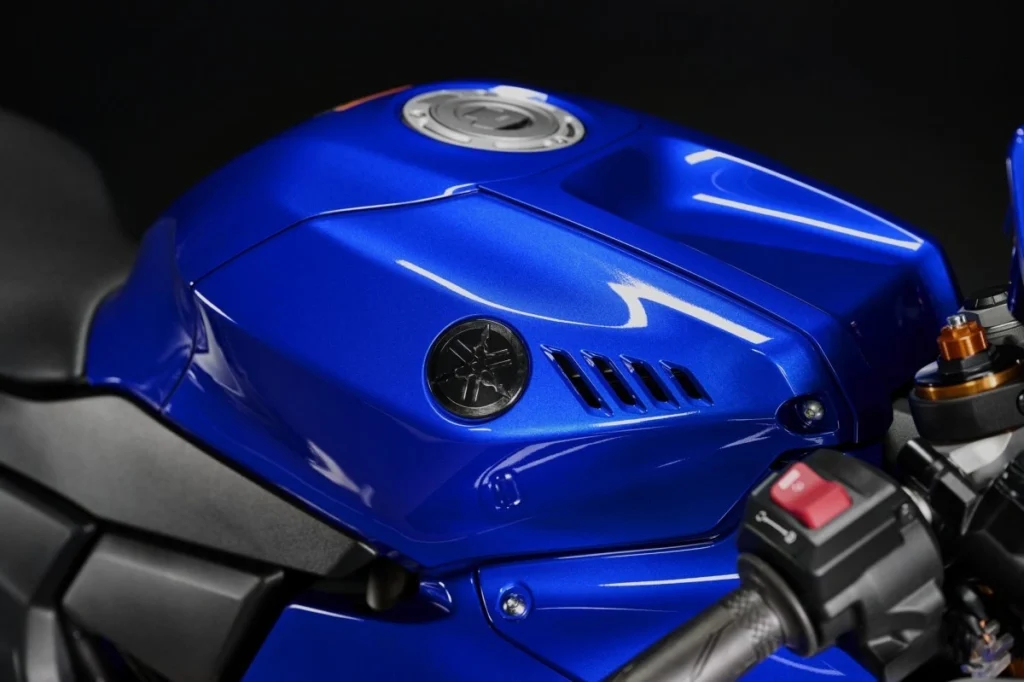
The engine is snappy, lively, and exciting from the first touch of the throttle. The engine is manageable, with a lump-twin engine feeling in the low rev range that makes the bike, in addition to its 417 lb weight, fun and easy to ride. The midrange powerband is the sweet spot of this motorcycle, and it is easy to get the bike to wheelie in second gear using a simple dip of the clutch lever. Revving the engine beyond the midrange is effective as well, but the R7 does not have the ability of Aprilia’s RS 660 to produce power in the upper rev band.
The new airbox design brings in awesome induction sounds while on the seat. The incorporation of the ride-by-wire technology in combination with the transmission improvements added to the smoothness and consistency of the already superb throttle action and balance. But it is the bi-directional quickshifter that works flawlessly in any situation. Regardless if full throttle at low rpm, or half throttle at high rpms, no problem. It even works flawlessly in aggressive downshifts when combined with the slipper assist clutch, without causing excessive wheel hop.
The new switchgear and mode button allows you to easily set up your rider aids and riding modes. For those who want to turn off rider aids, it can be done in just a few clicks via the easy to locate submenu. Turning the key cycle will enable your rider aids again.
The R7 is still made using a unit frame, but Yamaha claims to have redesigned nearly all the components of its high-tensile-steel tube frame. Chassis torsion stiffness, lateral stiffness, and longitudinal stiffness have been improved by 12 percent. While Yamaha has stuck with KYB for its suspension on the R7, new settings have been employed through the use of slightly softer fork springs along with greater low and mid speed damping for both fork and shock. Additionally, KYB has also given its shock new tuning along with an asymmetrical swingarm linkage system.
The braking system remains the same, using a Brembo master cylinder with dual discs measuring 298mm at the front end and a single disc measuring 245mm at the rear end. In its pursuit of lightweight and improved performance, Yamaha managed to cut down on the R7’s wheel weight by 4 percent through its proprietary SpinForged wheel construction technology involving heat and pressure applied to the rims of cast wheels. New wheels mean new tires: The R7 now comes with the latest Bridgestone S23 supersport tires, replacing the old S22 tires.
The handling is brisk and responsive. With a curb weight of 417 pounds, the bike features a 24-degree rake angle and 3.6-inch trail. The clip-on handlebars allow the rider to have a better connection with the front wheel.
The decreased spring rate of the forks from last year’s model bike had an immediate effect. The smoother ride of the suspension while riding around town was great, but when we began climbing Palomar Mountain, the fork would bottom out too soon in the turns. Without getting off the bike, I simply took the mechanical key from my pocket to click three more clicks of compression into the fork. This solved the problem. The R7 provides performance that cannot be matched by other supersports under $10,000.
The new model has become more comfortable while maintaining the look of commitment from its predecessor. Although the clip-on handlebars remain fixed beneath the upper triple clamp of the motorcycle, the grips were increased 3.6mm, repositioned 8.4mm rearward, and extended by 12mm.
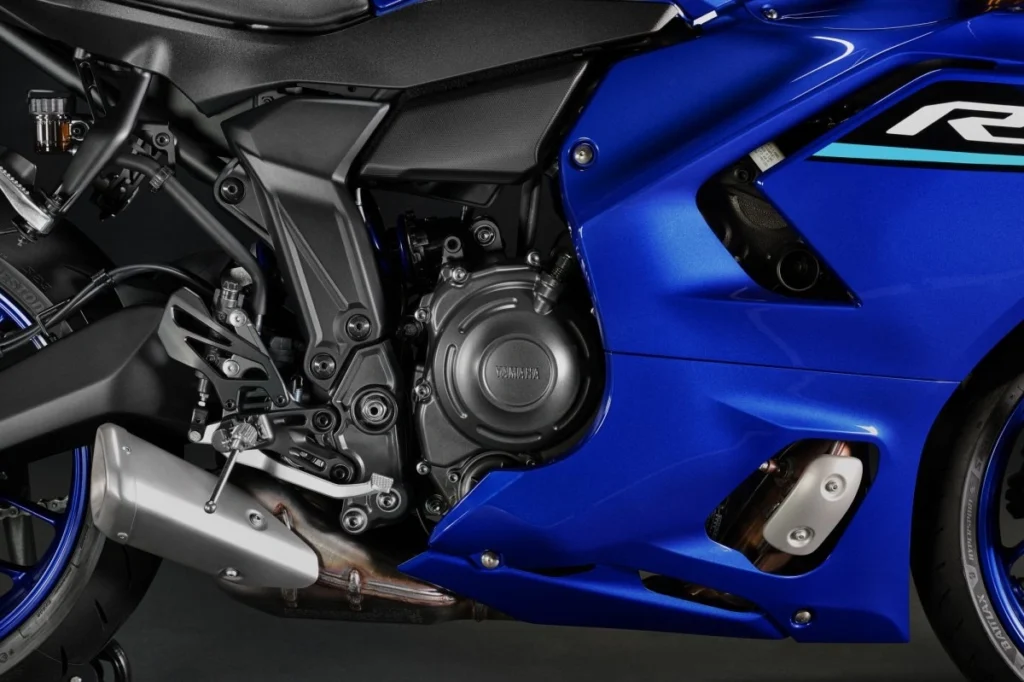
Additionally, the design of the seat and tank was improved for better rider comfort. For instance, the seat has become less steep compared to its predecessor, and the tank has become shorter where the seat joins it; this makes riding more relaxed and allows the rider to sit further forward without feeling cramped. The design of the tank fairing side pockets was made more spacious to provide ample room for the rider’s arms and legs.
2026 Yamaha YZF-R7 Technical Specifications and Price
Price: $9399 Engine: 689cc, DOHC, liquid-cooled twin; 8 valves Bore x Stroke: 80.0 x 68.6mm Compression Ratio: 11.5:1 Fuel Delivery: EFI Clutch: Wet, multiplate slipper/assist Transmission/Final Drive: 6-speed/chain Frame: Diamond Front Suspension: 41mm KYB USD fork, fully adjustable; 4.7 in. travel Rear Suspension: KYB link-type monocross single shock, preload and rebound adjustable; 4.8 in. travel Front Brake: 298mm hydraulic discs w/ ABS Rear Brake: 245mm hydraulic disc w/ ABS Wheels, Front/Rear: Cast aluminum; 17 in./17 in. Tires, Front/Rear: Bridgestone Battlax S23; 120/70ZR17 / 180/55ZR17 Rake/Trail: 23.7°/3.5 in. Wheelbase: 54.9 in. Seat Height: 32.7 in. Fuel Capacity: 3.7 gal. Curb Weight: 417 lb. Available: Now Contact: yamahamotorsports.com