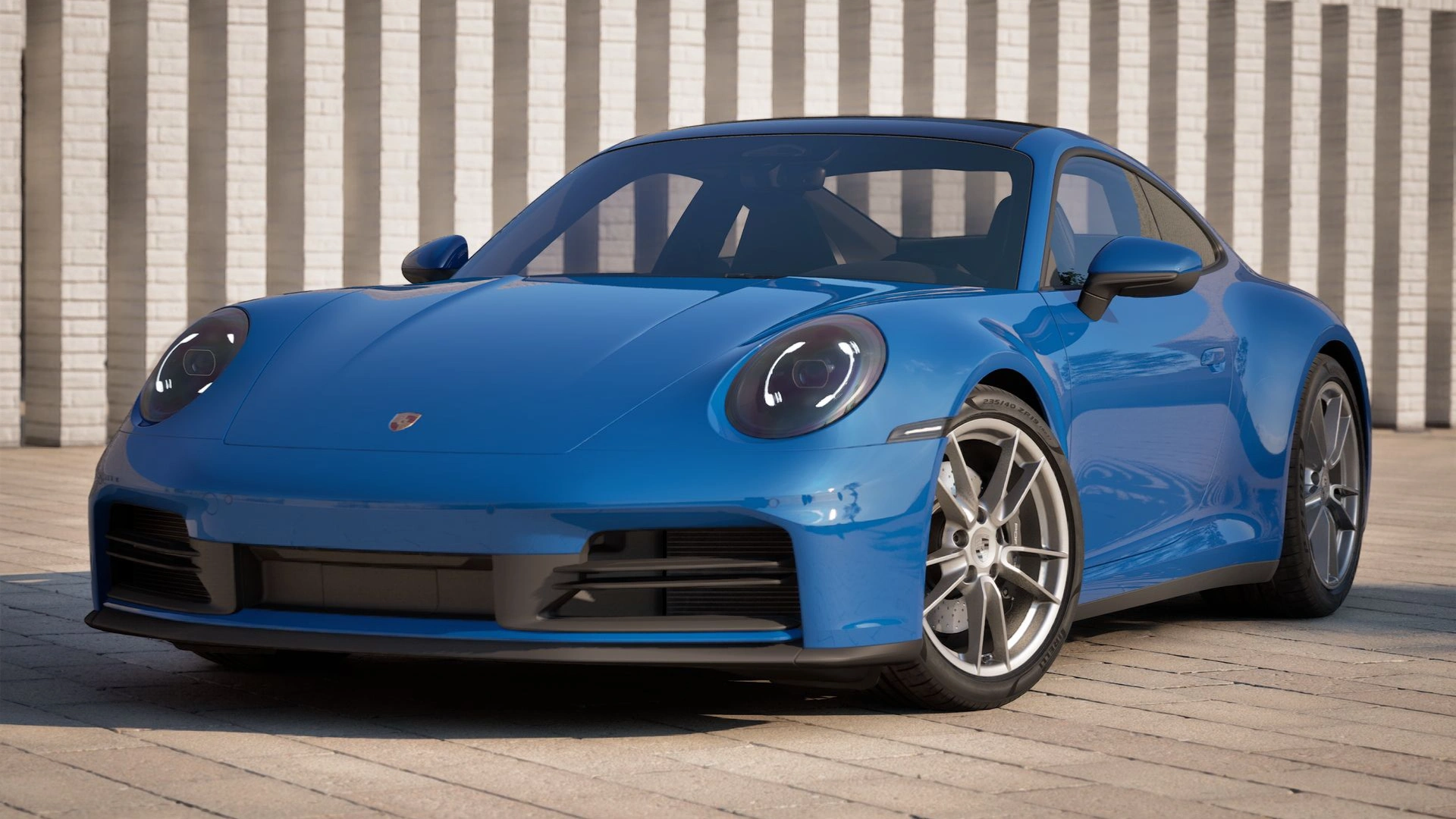
Among the many car models offered by Porsche, the Porsche 911 has the deepest lineup, replete with a mind-blowing number of variants. But the variant that will probably be seen most on the streets is the 2026 Porsche 911 Carrera S, which can be considered the mid-range model of the series. And despite being the most produced 911 model, it’s certainly no pushover.
The test drive of a 911 Carrera S coupé, for instance, was quite impressive with its “supercar-level” capabilities, such as 0-60 mph in 2.8 seconds, and excellent traction at an average g-force of 1.06. This time, however, we will test a 2026 Porsche 911 Carrera S Cabriolet, and the test vehicle seen here comes with a sleek outfit combining Vanadium Gray Metallic exterior with a bright red soft top roof. What makes it even more impressive is the fact that it also accelerates to 60 mph in under 3.0 seconds.
Also Read : 2027 Hyundai Ioniq 9 Black Ink First Look – All-Black Luxury SUV
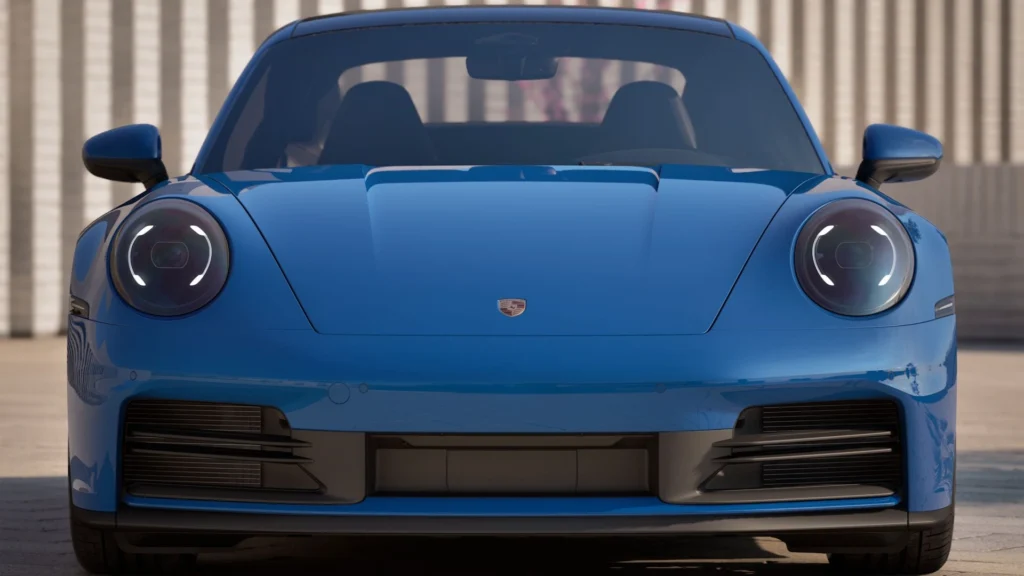
Porsche has a tendency to be conservative with their claims and then over-deliver on them. Our test vehicle handily exceeded Porsche’s claim of 3.3 seconds for the 0–60-mph sprint, reaching 60 mph in just 2.9 seconds, en route to a quarter-mile run of 11.1 seconds at 125.9 mph. Two of its key competitors fall well short. For instance, our most recent test of a Chevrolet Corvette Stingray convertible came in at 3.3 seconds for 0–60 mph, whereas a Mercedes-AMG SL55 4Matic+ took 3.6 seconds.
But even though both the Chevy and AMG feature muscular V-8 engines, the 911 is no less of a performer with a 3.0-liter twin-turbo flat-six engine delivering 473 horsepower and 390 pounds-feet of torque. This power goes into the rear wheels by means of an eight-speed, twin-clutch automatic transmission. One of the options of the Sport Chrono Package of our test car ($2,540) includes the launch control feature, which is considered one of the best in terms of simplicity and efficiency: just turn the driving mode switch knob located in the steering wheel two notches to “Sport Plus,” switch off the stability control, press the brake pedal with your left foot and accelerate hard with your right foot once the engine reaches 5,000 rpm. Then, just lift your left foot off the brake pedal and get ready for your sub-three-second sprint up to 60 mph. The 911 Carrera S cabriolet also performs brilliantly when it comes to braking, stopping at 60 mph within just 97 feet.
Also Read : I Drove a $10,000 Chinese EV… and It Actually Impressed Me!
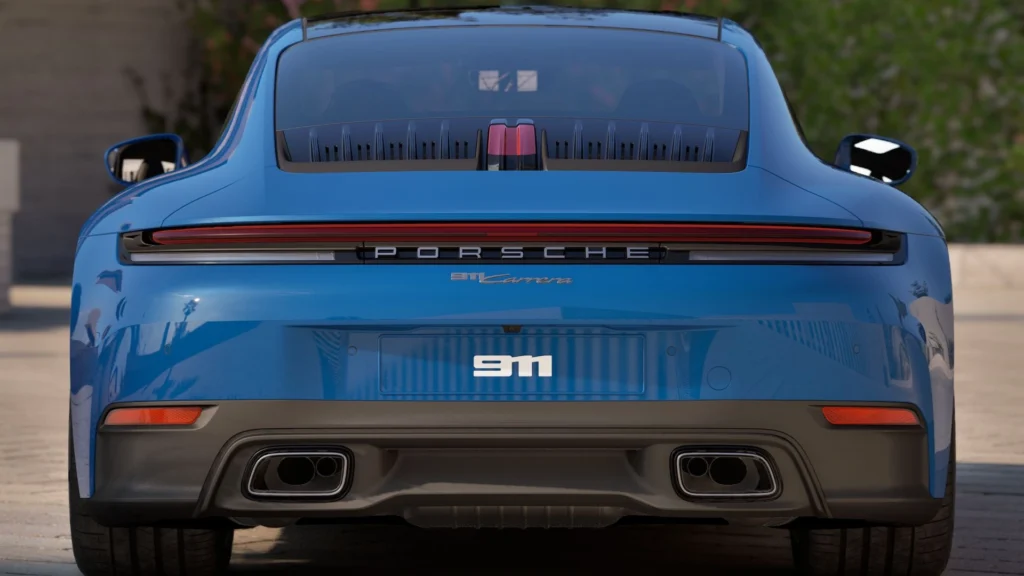
The Sport Chrono option was not the only one among those installed on our test car. Other options included the rear-wheel steering system and the sport suspension package with lowered ride height (0.4 inch), increased stiffness of anti-roll bars in both axles, and revised active dampers. Along with the sticky Pirelli P Zero tires that were equipped, the 911 Carrera S cabriolet became an outstanding car, answering instantly to all our commands. As a result, there were no surprises at all. However, the lap time of 23.2 seconds was enough to beat the SL55 with its 23.3 seconds. The difference between the two cars was larger in favor of the Porsche 911 when we took a look at the lap times of our third competitor – Corvette Stingray, which was more than two seconds slower. On the other hand, the latter was equipped with the all-season tires. It seems like understeer was one of the weak spots of the 911 Carrera S cabriolet, but we would attribute this tendency to the higher curb weight of the cabriolet (3,683 pounds against 3,509 pounds of the coupe).
Of course, the average cabrio driver probably won’t investigate these driving characteristics. That being said, we would suggest that the owner find some good mountain roads with plenty of turns and a sunny day for dropping the top. That is precisely what we found on our drive around Los Angeles, and it proved the car just as much fun in these conditions as it was on our figure-eight run. It may not produce the same sound level as a Corvette, but the unique and raucous sounds coming from the Porsche 911 make for excellent noises. The car’s suspension is sporty and yet still able to soak up all kinds of bumps like fresh Nikes.
Also Read : 2026 Macan GTS Electric – Speed, Handling & First Test Verdict
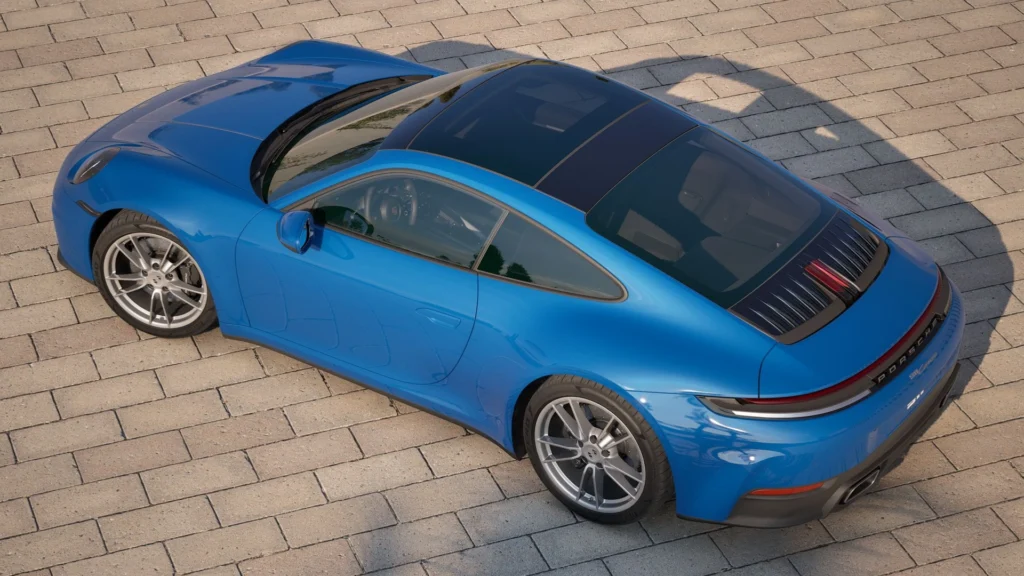
But what about once the fun is done and it’s time to get back to reality? Well, as any fan of the car can expect, you don’t switch cars. You see, Porsche has invested just as much time and thought into ensuring comfort as it did making sure the car was sporty and fast. Despite its sporty suspension setup and big 21-inch wheels, this car has relatively smooth roads. The interior is well insulated enough to provide a quiet cabin even when you’ve got the top up.
The optional Adaptive Sport Seats Plus, which ensured great lateral support while driving on the track, were equally comfy for long trips. The quality of materials used in the interior is fantastic – from tight leather to knurled switches, which feel great under your fingertips as you turn and press them. Even though we wish for the analog speedometer like those in older 911 models, the digital cluster and the infotainment system work seamlessly.
Although officially this vehicle can hold up to four passengers, trying to fit into every available seat is quite uncomfortable for everyone. There really isn’t any legroom at the back unless the seats in front are pushed forward significantly. One should consider the rear passenger compartment an additional storage space once the 4.8 cubic feet of the front trunk are occupied.
Adding to the list of complaints is the rear view, which has been slightly compromised by the raised trunk lid that conceals the power-operated soft top mechanism. This rear protrusion also adds to the awkward hard-side profile of the vehicle. However, the biggest complaint would have to be the steep price of admission (at least for most of us).
Our review model was priced at $197,370, approximately $25,000 more than the base price of the 911 Carrera S cabriolet. Indeed, this is nearly twice the cost of an equally-equipped Corvette Stingray convertible. Moreover, the price of the 911 continues to climb at a very fast rate. Is there a lack of demand for the Porsche brand? No way. The affluent know what they’re getting when they buy a 911, and it’s worth every penny.
2026 Porsche 911 Carrera S Cabriolet Specifications BASE PRICE $172,450 PRICE AS TESTED $197,370 VEHICLE LAYOUT Rear-engine, RWD, 4-pass, 2-door internal combustion convertible POWERTRAIN 3.0L twin-turbo direct-injected DOHC 24-valve flat-6 POWER 473 hp @ 6,500 rpm TORQUE 390 lb-ft @ 2,200 rpm TRANSMISSION 8-speed dual-clutch automatic CURB WEIGHT (F/R DIST) 3,683 lb (37/63%) WHEELBASE 96.5 in LENGTH x WIDTH x HEIGHT 178.8 x 72.9 x 50.9 in TIRES Pirelli P Zero PZ4 NA1
F: 245/35ZR20 91Y
R: 305/30ZR21 100YEPA FUEL ECONOMY,
CITY/HWY/COMBINED17/24/20 mpg EPA RANGE 332 mi ON SALE Now 0-60 MPH 2.9 sec QUARTER MILE 11.1 sec @ 125.9 mph BRAKING, 60-0 MPH 97 ft LATERAL ACCELERATION 1.02 g FIGURE-EIGHT LAP 23.2 sec @ 0.90 g (avg)